
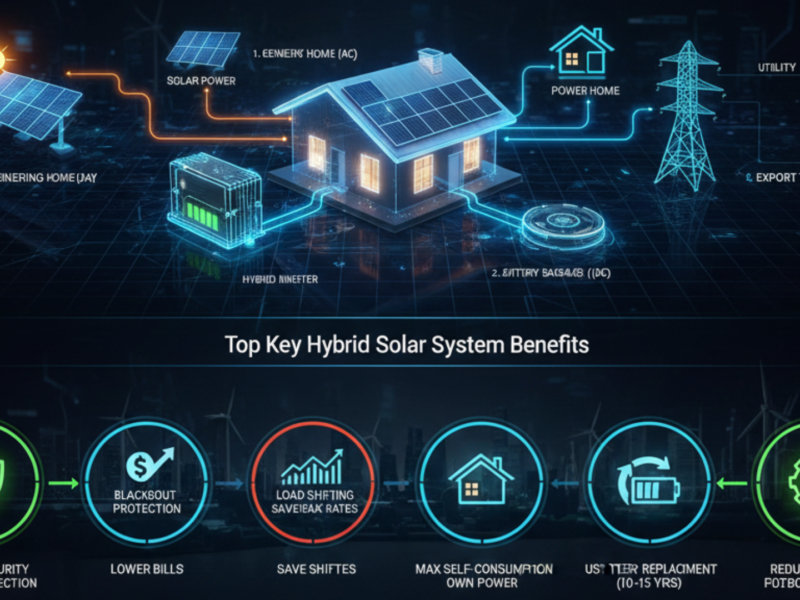
In the rapidly evolving world of renewable energy, homeowners are no longer forced to choose between staying connected to the grid or going completely off-grid. There is a middle ground that offers the best of both worlds: the Hybrid Solar System.If you are looking for energy security, reduced electricity bills, and a smaller carbon footprint, understanding how this technology works is crucial. This step-by-step guide will demystify the technology and highlight the key Hybrid solar system benefits that are making this the preferred choice for modern households.
What is a Hybrid Solar System?
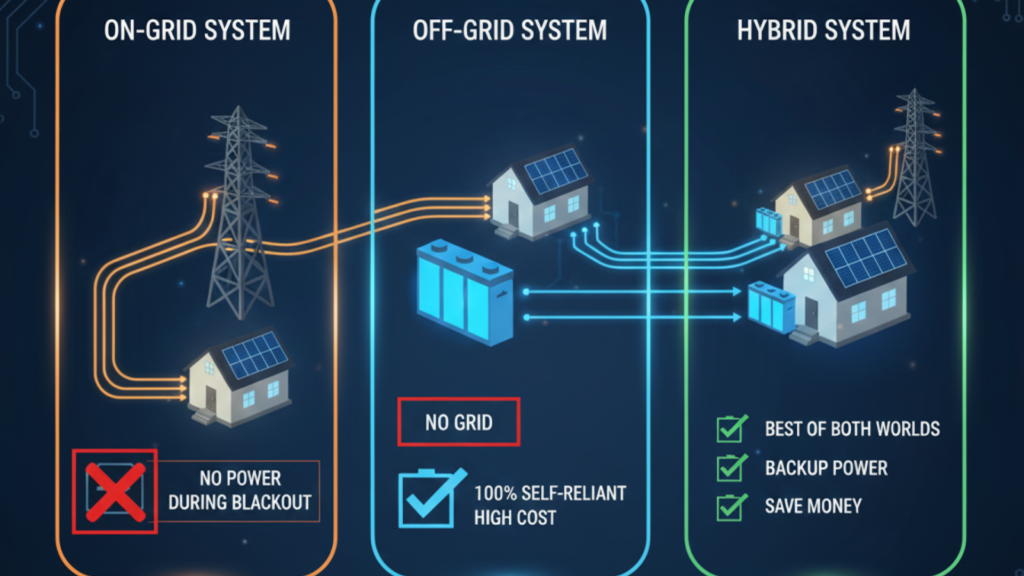
A hybrid solar system generates power in the same way as a common grid-tie solar system but uses special hybrid inverters and batteries to store energy for later use. This ability to store energy enables most hybrid systems to operate as a backup power supply during a blackout, similar to a UPS system.
Unlike an off-grid system, which is completely disconnected from the utility grid, a hybrid system remains connected. This means you can draw power from the grid if your batteries run out, and you can export excess power back to the grid (net metering) when your batteries are full.
Step-by-Step: How Does a Hybrid Solar System Work?
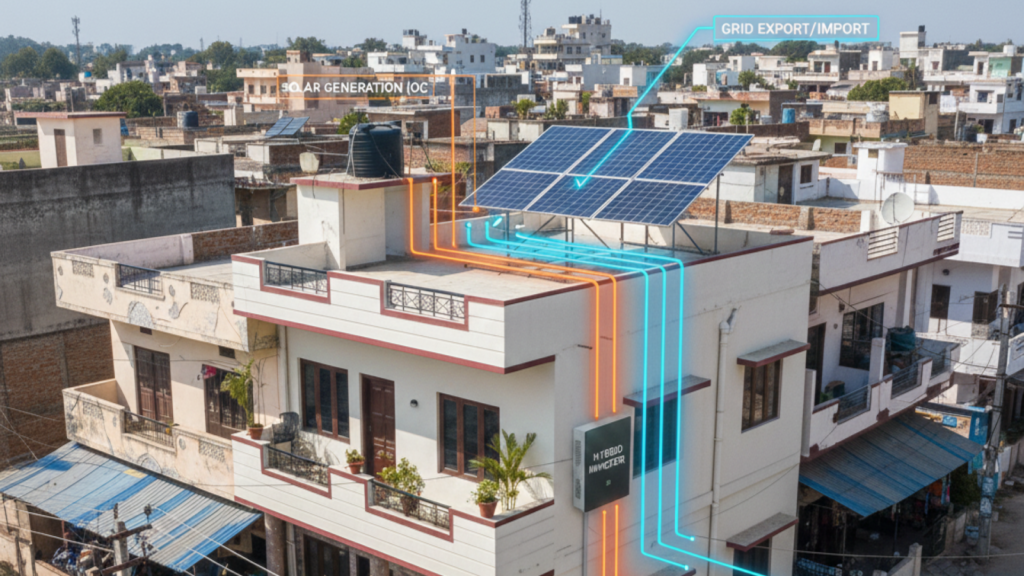
To understand the Hybrid solar system benefits, you must first understand the workflow. Here is the step-by-step process of how energy flows through a hybrid setup:
Step 1: Energy Generation
The process begins with your solar photovoltaic (PV) panels. When sunlight hits the panels, it is converted into Direct Current (DC) electricity. This is the raw power that needs to be processed before it can power your home.
Step 2: Conversion via Hybrid Inverter
The DC electricity flows to the hybrid inverter. This is the “brain” of the system. The inverter converts the DC electricity into Alternating Current (AC) electricity, which is the standard format used by home appliances.
Step 3: Powering the Home (Self-Consumption)
The AC power is directed first to your home’s main switchboard. It powers your lights, refrigerator, Wi-Fi, and other essential loads. This is called “self-consumption” and is the most efficient way to use solar energy.
Step 4: Charging the Battery
If your solar panels are producing more energy than your home is currently using, the hybrid inverter diverts that excess energy to charge your solar battery bank.
Step 5: Exporting to the Grid
Once your home is powered and your batteries are fully charged, any remaining excess energy is exported to the utility grid. Depending on your local regulations, you may receive credits on your electricity bill for this export (Net Metering).
Step 6: Drawing from the Battery/Grid
At night or during peak tariff hours, the system draws stored energy from the battery. If the battery is depleted, the system seamlessly switches to draw power from the utility grid, ensuring you never lose power.
Top Hybrid Solar System Benefits for Homeowners
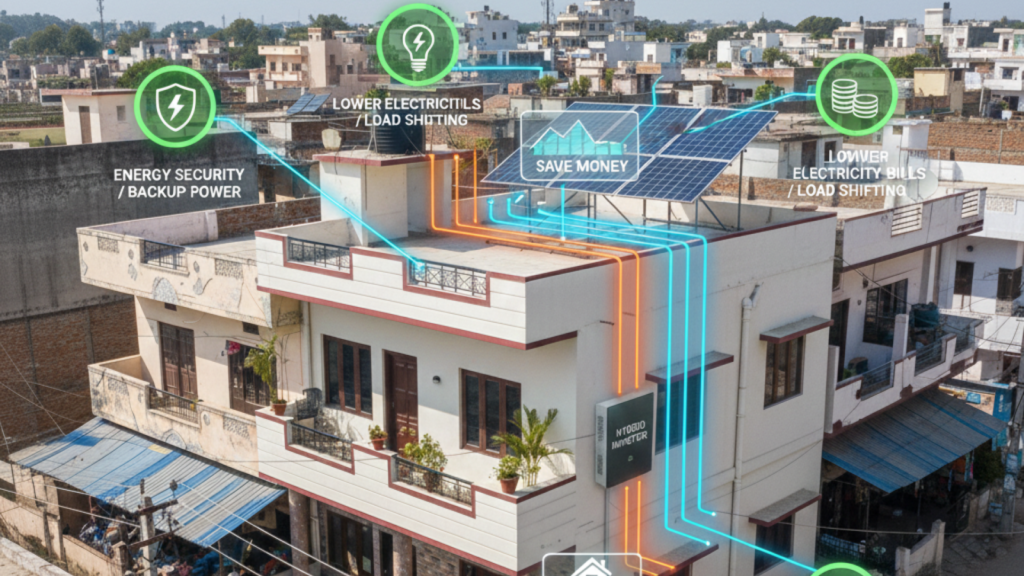
Why are so many people switching to this model? The answer lies in the versatile Hybrid solar system benefits that cover economic, environmental, and practical needs.
1. Continuous Power Supply (Energy Security)
One of the most significant Hybrid solar system benefits is the ability to keep the lights on during a power outage. In a traditional on-grid system, if the grid goes down, your solar panels shut off for safety reasons. A hybrid system, however, can isolate itself from the grid and continue to power your essential loads using stored battery energy.
2. Maximizing Solar Utilization
Without a battery, typical households only use about 30-50% of the solar energy they generate because most generation happens during the day when people are at work. A hybrid system allows you to store that daytime energy and use it in the evening. This drastically increases your solar self-consumption, often up to 80-90%.
3. Reducing Electricity Bills (Time-of-Use Arbitrage)
Many utility companies charge higher rates for electricity during peak evening hours (Time-of-Use tariffs). A major Hybrid solar system benefit is “load shifting.” You can program your system to use free stored battery power during these expensive peak hours and only switch to the grid during off-peak times when rates are lower.
4. Low Maintenance
Compared to fully off-grid systems, which often require diesel generators as backups and massive battery banks, hybrid systems are cleaner and require less maintenance. The grid acts as a backup, reducing the strain on your battery bank.
Comparison: Hybrid vs. On-Grid vs. Off-Grid
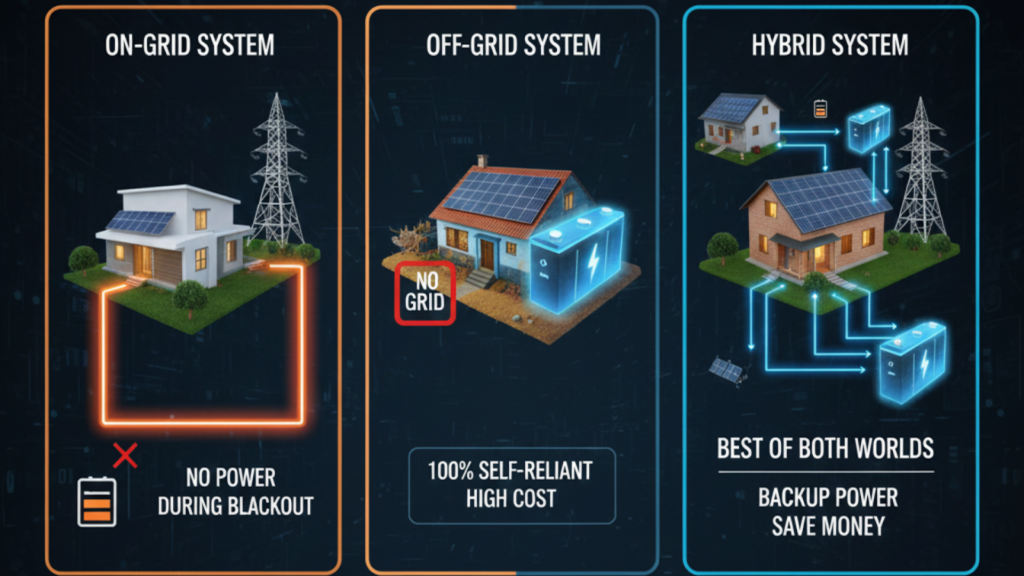
To better understand where the Hybrid solar system benefits shine, let’s compare the three main types of solar setups.
Table 1: Solar System Comparison
| Feature | On-Grid (Grid-Tie) | Off-Grid | Hybrid Solar System |
| Grid Connection | Yes | No | Yes |
| Battery Storage | No | Yes (Mandatory) | Yes (Optional/Included) |
| Power During Blackout | No (System shuts down) | Yes | Yes (Backup mode) |
| Cost | Low | High | Medium-High |
| Electricity Bill Savings | High (via Net Metering) | 100% (No bills) | Very High (Self-use + Export) |
| Reliability | High (Grid backup) | Variable (Depends on battery) | Highest (Grid + Battery) |
Components That Improve Hybrid Solar System Benefits
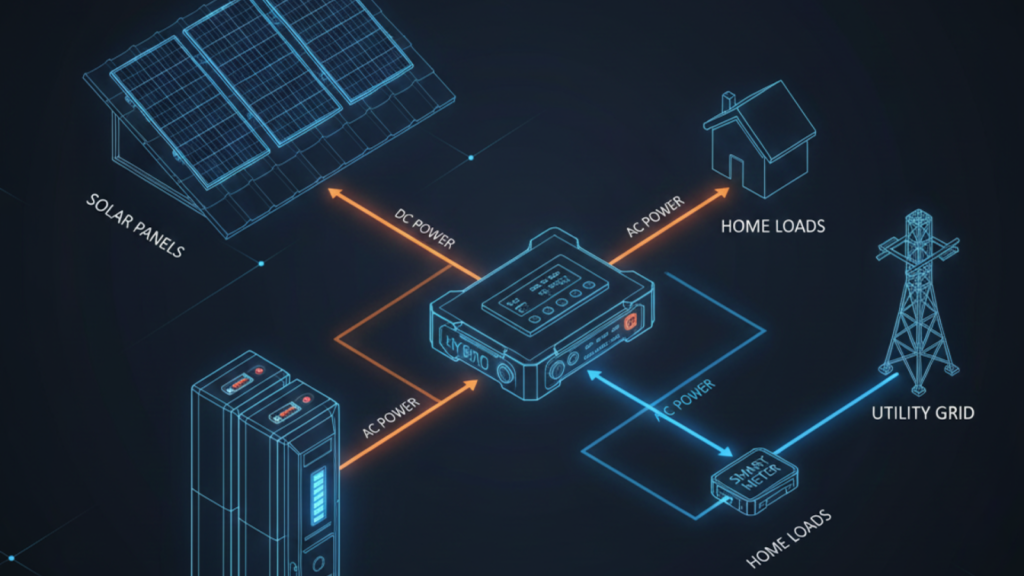
A hybrid system is an ecosystem of advanced hardware. Here is what you will need:
1. Solar Panels
The source of your power. Monocrystalline panels are recommended for hybrid systems due to their higher efficiency.
2. Hybrid Inverter Features Supporting Hybrid Solar System Benefits
Unlike standard string inverters, a hybrid inverter is a bi-directional device. It can convert DC to AC for the home, and also AC to DC to charge batteries from the grid if necessary. It manages the flow of energy between the panels, battery, home, and grid.
3. Battery Storage and Its Impact on Hybrid Solar System Benefits
Lithium-ion batteries are the industry standard for modern hybrid systems. They offer a deeper depth of discharge (DoD) and a longer lifespan compared to older Lead-Acid batteries.
4. Smart Meter / Energy Meter
This device communicates with the inverter, telling it exactly how much power the home is using and whether to charge or discharge the battery to ensure zero export or maximum self-consumption.
Economic Analysis of Hybrid Solar System Benefits
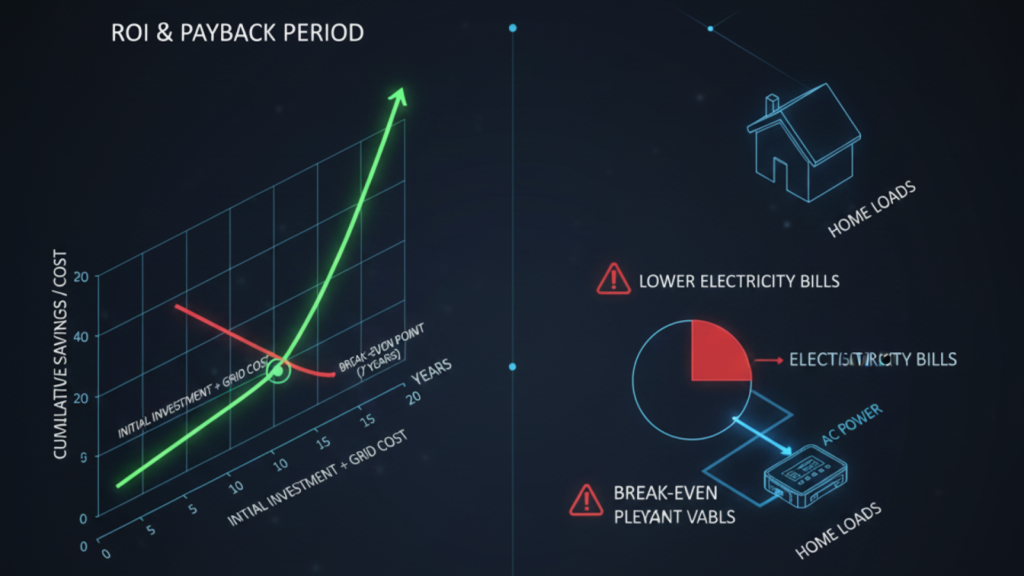
While the initial cost is higher than a simple grid-tie system, the long-term Hybrid solar system benefits often outweigh the upfront investment.
ROI and Payback Period
A hybrid system typically has a payback period of 5 to 7 years. However, as electricity prices rise, this period shortens. By minimizing your reliance on the grid, you insulate yourself from future energy price inflation.
Pros and Cons Summary
Let’s break down the advantages and disadvantages to give you a clear picture.
Table 2: Pros and Cons of Hybrid Solar Systems
| Pros (Advantages) | Cons (Disadvantages) |
| Energy Independence: Reduces reliance on the utility grid significantly. | Higher Upfront Cost: Batteries and hybrid inverters are more expensive than standard setups. |
| Backup Power: Provides security during storms and grid failures. | Complex Installation: Requires more wiring and specialized installation expertise. |
| Load Shifting: Avoids high peak-hour electricity tariffs. | Battery Replacement: Batteries have a shorter lifespan (10-15 years) than panels (25+ years). |
| Future Proof: Ready for Smart Grid integration and Electric Vehicle (EV) charging. | Space Requirements: Batteries require dedicated, ventilated space for installation. |
Is a Hybrid System Right for You? (Hybrid Solar System Benefits Guide)
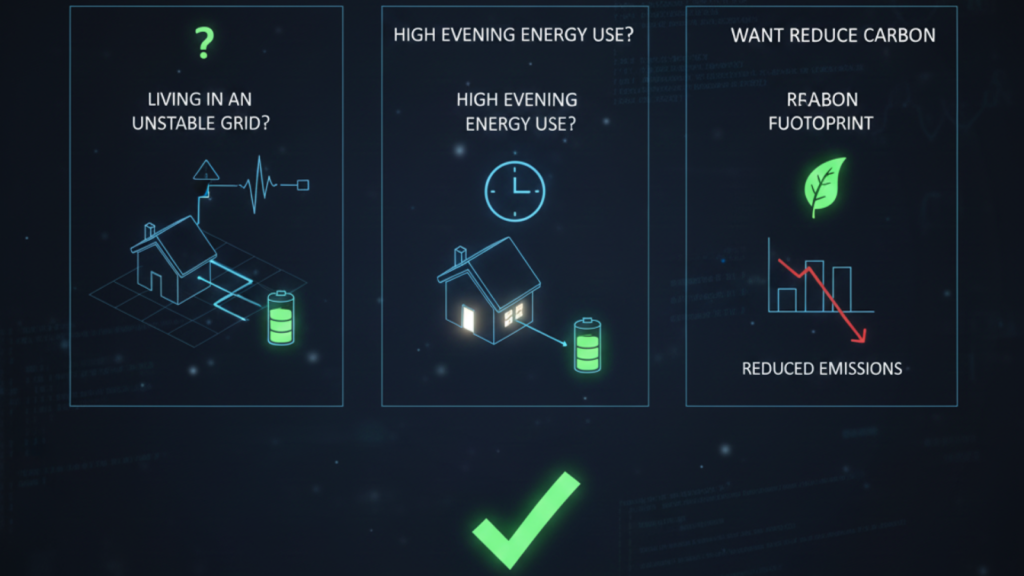
Understanding the Hybrid solar system benefits is one thing, but is it the right choice for your specific situation? You should consider a hybrid system if:
- You experience frequent power outages: If your area has an unstable grid, the backup capability is invaluable.
- You have high evening energy usage: If you are rarely home during the day, a standard solar system without batteries will waste much of your generation. A hybrid system stores it for your return.
- You want to reduce your carbon footprint: Storing your own green energy is more environmentally friendly than exporting it and drawing coal-powered electricity from the grid at night.
- Net Metering incentives are low: In some regions, utility companies pay very little for exported solar power. In this case, storing the energy for yourself is financially smarter than selling it cheap.
Installation and Maintenance Tips
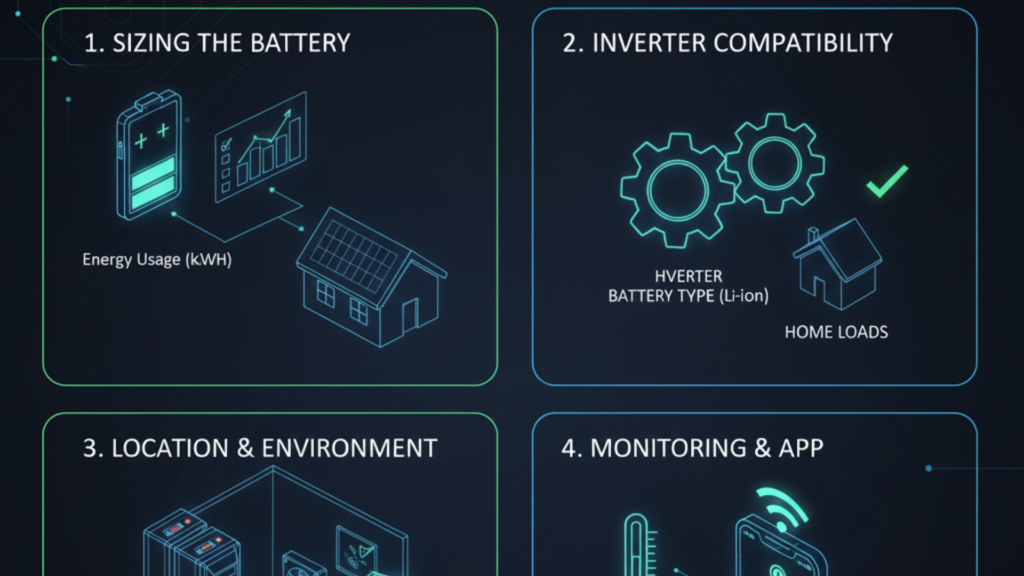
To ensure you maximize your Hybrid solar system benefits, follow these installation tips:
- Sizing the Battery: Do not undersize your battery. Ensure it has enough capacity to power your essential night-time loads (fridge, lights, fans).
- Inverter Compatibility: Ensure your hybrid inverter is compatible with the specific battery chemistry you choose.
- Location: Install batteries in a cool, dry place out of direct sunlight to prolong their life.
- Monitoring: Use the mobile app provided with your inverter. Monitoring your generation and consumption patterns is the best way to tweak your habits and save more money.
Conclusion
The transition to renewable energy is no longer just about saving the planet; it is about smart economics and energy security. A Hybrid Solar System represents the pinnacle of current residential solar technology. It bridges the gap between the reliability of the grid and the independence of battery storage.
By investing in this technology, you unlock significant Hybrid solar system benefits, including immunity from blackouts, protection from rising electricity rates, and maximum utilization of the sun’s energy. While the initial investment is higher than a traditional system, the peace of mind and long-term savings make it a superior choice for the modern homeowner.
Ready to take control of your energy future? Start by assessing your current energy bills and consulting with a certified solar installer to design a hybrid system tailored to your needs.
FAQ on Hybrid Solar System Benefits
Q1: Can a hybrid solar system work without a battery?
Yes, most modern hybrid inverters can function without a battery initially. You can install the hybrid inverter and panels first (functioning like a grid-tie system) and add the battery later to unlock full Hybrid solar system benefits like backup power.
Q2: How long can a hybrid system power my house during an outage?
This depends entirely on the size of your battery bank and your power usage. A typical 5kWh to 10kWh battery can power essential appliances (lights, fridge, Wi-Fi, TV) for 8 to 12 hours. It will not power heavy loads like air conditioners indefinitely.
Q3: What is the lifespan of hybrid solar batteries?
Modern Lithium-ion (LiFePO4) batteries typically last between 10 to 15 years, depending on usage cycles (how often you charge and discharge them).
Q4: Do hybrid systems qualify for government incentives?
In many countries, hybrid systems qualify for the same solar tax credits and rebates as standard systems. Some regions even offer additional incentives specifically for battery storage installation.
Q5: What is the main difference between hybrid and off-grid?
The main difference is the grid connection. An off-grid system has zero connection to the utility company. A hybrid system stays connected, allowing you to use the grid as a backup, which makes the system more reliable and often cheaper than a fully off-grid setup.
