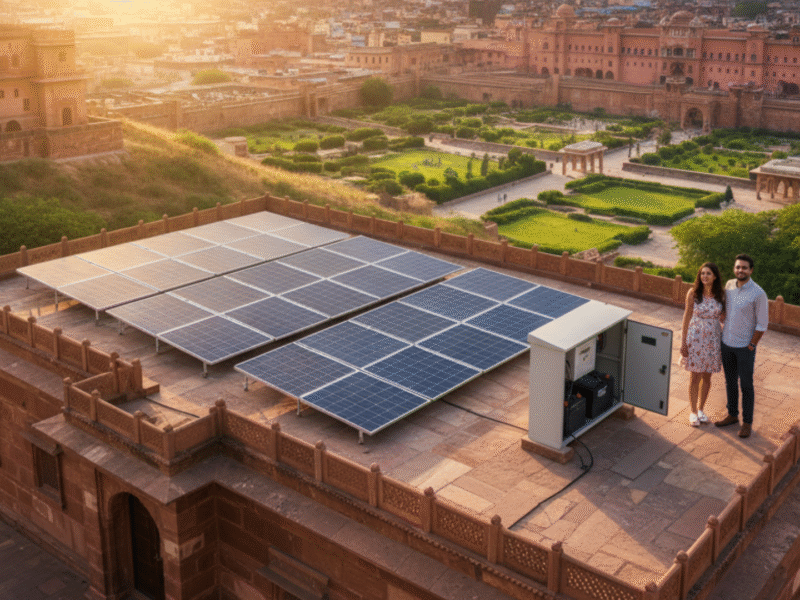
The dream of true energy independence is now more attainable than ever. If you want to power a remote cabin, a tiny home, or just cut the cord with the utility company, a reliable off-grid solar power system is your answer.
But where do you start? The terminology, components, and sizing calculations can feel overwhelming. This ultimate beginner’s guide breaks down everything you need to know about off-grid solar power systems into simple, actionable steps.
Defining Your Freedom: What is an Off-Grid Solar System?
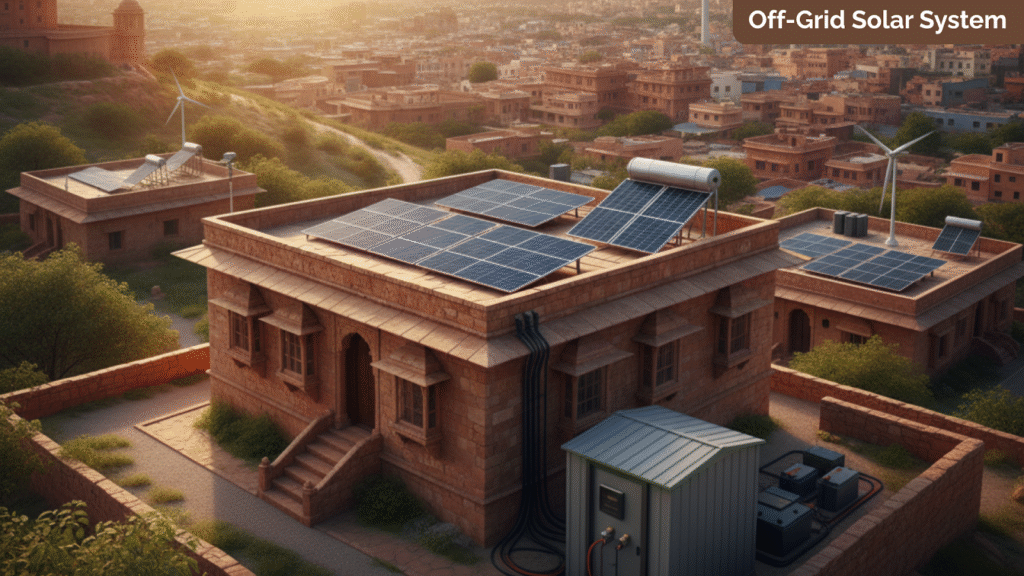
An off-grid solar power system, also known as a stand-alone power system (SAPS), is a setup that is completely independent of the public utility electricity grid. It generates, stores, and supplies all the electricity a home or structure needs. You, not the power company, control your energy destiny.
Key Advantages of Going Off-Grid
- Energy Independence: You are completely self-sufficient. Utility price hikes and sudden power outages become non-issues.
- Location Flexibility: You can power a home anywhere, even miles from the nearest power line, where grid connection costs are often astronomical.
- Reduced Carbon Footprint: You rely on a clean, renewable energy source: the sun.
- Increased Property Value: A fully functioning off-grid solar power system is a massive asset to any property and is highly appealing to potential buyers.
The 4 Essential Components of an Off-Grid Solar Power System
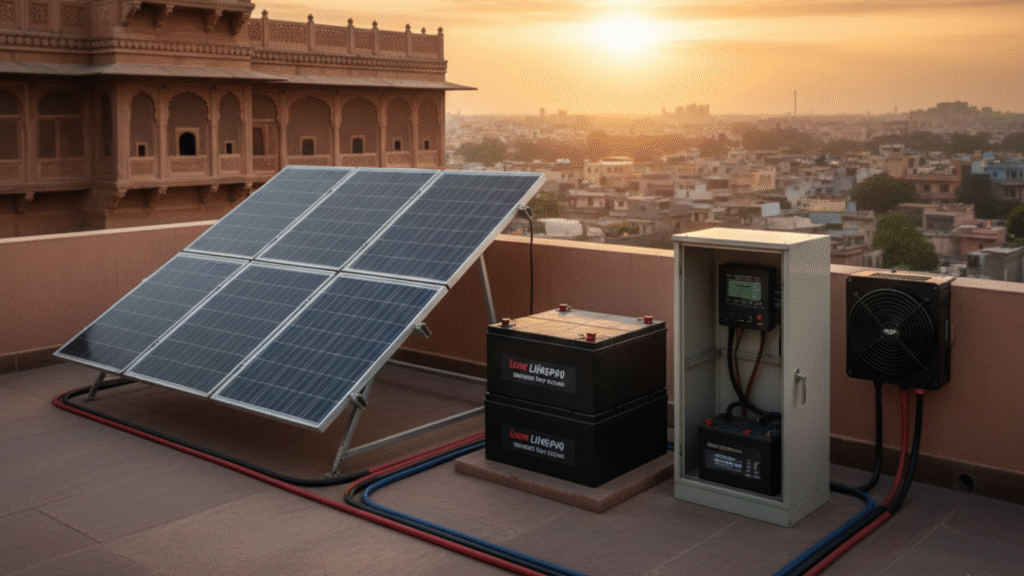
Every successful off-grid solar system relies on four core components working in harmony. You need to understand each part before you start planning.
1. Solar Panels (The Energy Source)
These are the most visible part of your system. Solar panels (or PV modules) capture sunlight and convert it into direct current (DC) electricity. Look for Monocrystalline Solar Panels. They offer the best efficiency, meaning you’ll need fewer panels to generate the power your home requires.
2. The Battery Bank (The Storage Heart)
Since the sun doesn’t shine 24/7, your batteries are the most critical component. They store the excess DC power generated during the day for use at night or during overcast periods. We highly recommend Lithium Iron Phosphate (LiFePO4) batteries for modern off-grid solar power systems because they are lighter, last much longer, and require zero maintenance.
3. The Charge Controller (The System Brain)
This device regulates the power flowing from your solar panels into your batteries. Its main job is to prevent the batteries from overcharging, which causes damage. Always choose an MPPT (Maximum Power Point Tracking) controller; it’s more efficient and significantly improves the power you harvest from your panels.
4. The Inverter (The Converter)
Your batteries store power as DC, but most standard household appliances run on alternating current (AC). The inverter converts the stored DC electricity into usable AC electricity. You must choose a Pure Sine Wave Inverter. This produces “cleaner” electricity, which is safe for all sensitive electronics like computers and smart devices.
Sizing Your Off-Grid Solar Power System: A Step-by-Step Guide

Accurately sizing your system is the most important step. Follow this process to avoid running out of power or overspending on oversized equipment.
Step 1: Conduct Your Energy Audit
List every appliance you plan to run. Note its Wattage (W) and the number of Hours per Day you use it. Multiply the wattage by the hours to get your Daily Watt-Hours (Wh). Add up these figures to find your total daily energy consumption.
Pro-Tip: You can drastically reduce your required system size and cost by switching to energy-efficient LED lights and modern, DC-powered appliances. It’s always cheaper to save power than to generate and store it.
Table 1: Example Daily Energy Audit
| Appliance | Power (Watts) | Usage (Hours/Day) | Daily Energy (Watt-Hours) |
| LED Lights (5 total) | 40 W | 4 Hours | 160 Wh |
| Laptop Computer | 60 W | 5 Hours | 300 Wh |
| Small Refrigerator | 150 W | 8 Hours (Compressor Run Time) | 1200 Wh |
| Cell Phone Charger | 10 W | 2 Hours | 20 Wh |
| Daily Total | – | – | 1680 Wh |
Step 2: Calculating Off-Grid Battery Storage
You need to know your desired Autonomy—how many days your system can run without sunshine. Most people plan for three days of backup power. Multiply your Total Daily Wh by your desired days of autonomy (e.g., 3 days) to get your total battery capacity requirement.
Step 3: Determine Solar Panel Wattage
Use your average Peak Sun Hours (PSH) for your location (you can find this data online). Divide your Total Daily Wh by your PSH, and then add a safety factor (typically 20%) to account for real-world losses from temperature, wiring, and panel angle. This final number gives you the total Watts your solar array needs to produce.
Table 2: Key System Sizing Calculations
| Calculation Step | Formula Used | Example (Using 1680 Wh Daily Load) | Result |
| Total Daily Energy Needed | Daily Wh × Loss Factor (1.3 for off-grid) | 1680 Wh×1.3 | 2184 Wh/day |
| Total PV Array Watt-Peak (Wp) | Total Daily Energy ÷ Peak Sun Hours (PSH) (Assume 4 PSH) | 2184 Wh/day÷4 PSH | 546 Wp |
| Number of Panels | Total Wp ÷ Panel Wattage (Assume 300W panels) | 546 Wp÷300 W | ≈2 Panels |
| Required Battery Capacity | Total Daily Energy × Days of Autonomy (Assume 3 Days) | 1680 Wh×3 Days | 5040 Wh |
Installation, Maintenance, and Next Steps for Your Solar System
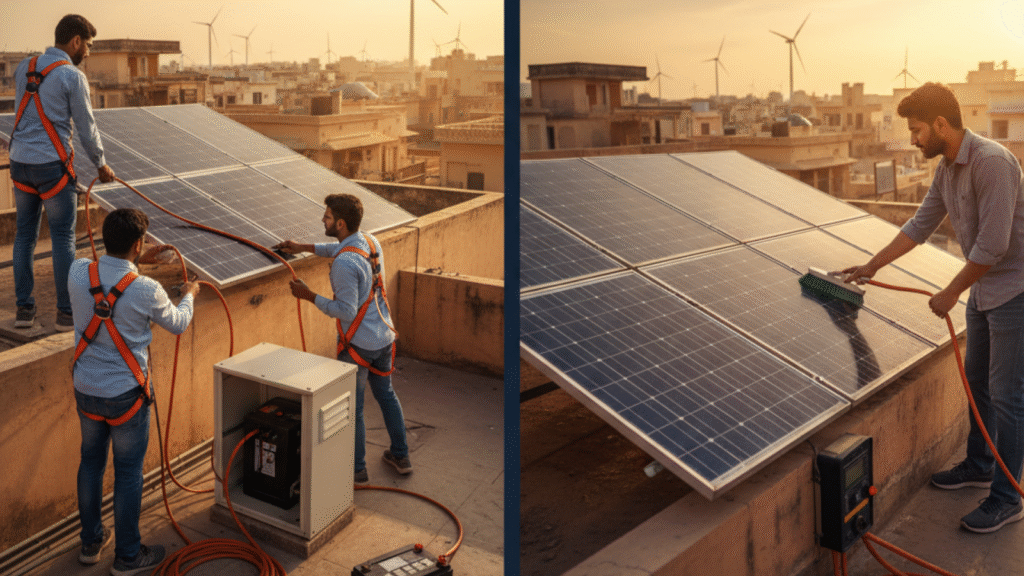
For smaller off-grid solar power systems, a DIY approach is possible. However, if you are powering an entire home, always consult with or hire a licensed solar professional. They ensure your system is safe, meets local regulations, and is optimized for maximum efficiency.
Maintenance and Care for Your Off-Grid Solar Power System
System maintenance is surprisingly minimal:
- Cleaning: Rinse your solar panels a few times a year to remove dust and debris.
- Monitoring: Regularly check your charge controller and inverter displays to ensure stable power production and battery charging.
- Safety: Periodically inspect wiring connections for wear or corrosion.
Frequently Asked Questions about Your Off-Grid Solar Power System
Q. How much do off-grid solar power systems cost?
A.The cost varies widely based on size and the components chosen. A basic small cabin setup might cost a few thousand dollars, while a large, whole-house system with high-capacity lithium batteries can exceed $20,000 to $30,000. Your power consumption dictates the final price.
Q. Can I run heavy appliances like an Air Conditioner?
A. Yes, but they require a significantly larger and more expensive system. AC units, electric water heaters, and electric stoves all draw massive amounts of power. Many people living off-grid choose propane for cooking and water heating to minimize their electrical load.
Q. What is the lifespan of an off-grid system?
A. High-quality solar panels last 25 years or more. Lithium batteries typically last 10-15 years before needing replacement, and inverters usually last 10-15 years. This means your initial investment provides decades of energy independence.
Q. Can I start with a small system and expand later?
A. Absolutely! This is a smart approach for beginners. Choose an inverter and a battery bank that are modular and easily expandable. This allows you to purchase a basic system now and add more panels or battery capacity as your budget or energy needs grow.
Ready to take the next step toward energy freedom? Start that energy audit today to understand your power needs!
