
Unlock the secrets of grid-tied solar. Explore the four core On-Grid Solar Components and the crucial Balance of System (BOS) parts that maximize efficiency, savings, and sustainability for your home or business.
The Foundation: Understanding On-Grid Solar Systems
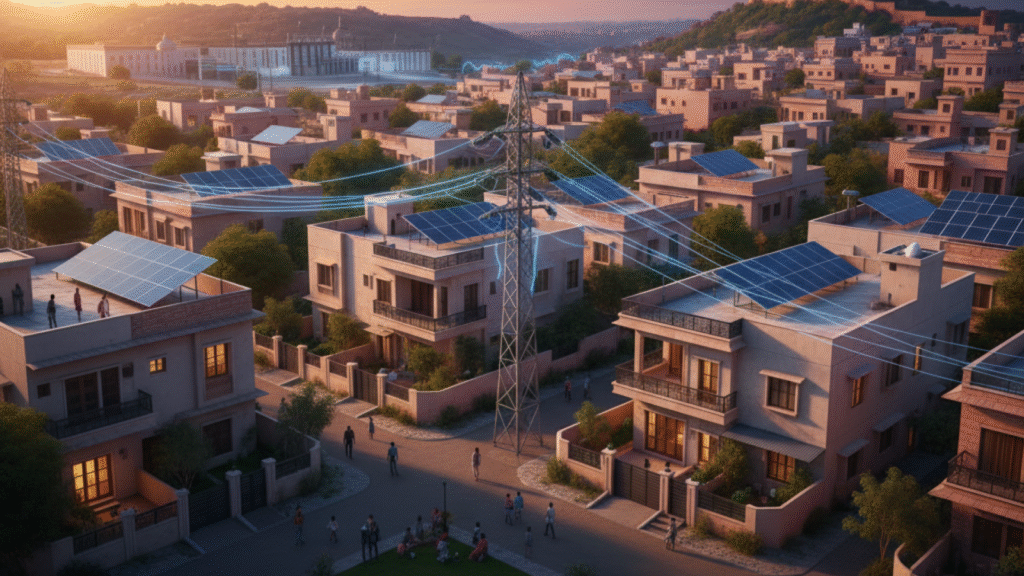
Adopting an On-Grid Solar System represents the most popular and cost-effective solar solution for property owners connected to their utility company. This system allows you to significantly cut monthly electricity costs while retaining grid reliability. Crucially, the system eliminates the need for expensive battery banks because it actively uses the public power grid as a “virtual battery. “When your solar array generates power exceeding your needs, the surplus energy flows instantly to the utility lines. Later, when your production dips (like at night), you simply pull electricity back from the grid. This seamless, two-way exchange delivers maximum savings and minimal maintenance. To make this sophisticated power exchange possible, a collection of essential On-Grid Solar Components must work together perfectly.
The Core Difference: Grid-Tied vs. Off-Grid
Grid-tied systems rely entirely on the utility grid for stability and backup power. Due to safety codes, your solar system must shut off instantly during a grid outage (anti-islanding). Off-grid systems, conversely, use costly batteries for energy independence. For most properties focused on reducing utility bills, the on-grid model offers the fastest and highest return on investment. You maximize savings by using the grid for free storage.
The 4 Essential On-Grid Solar Components
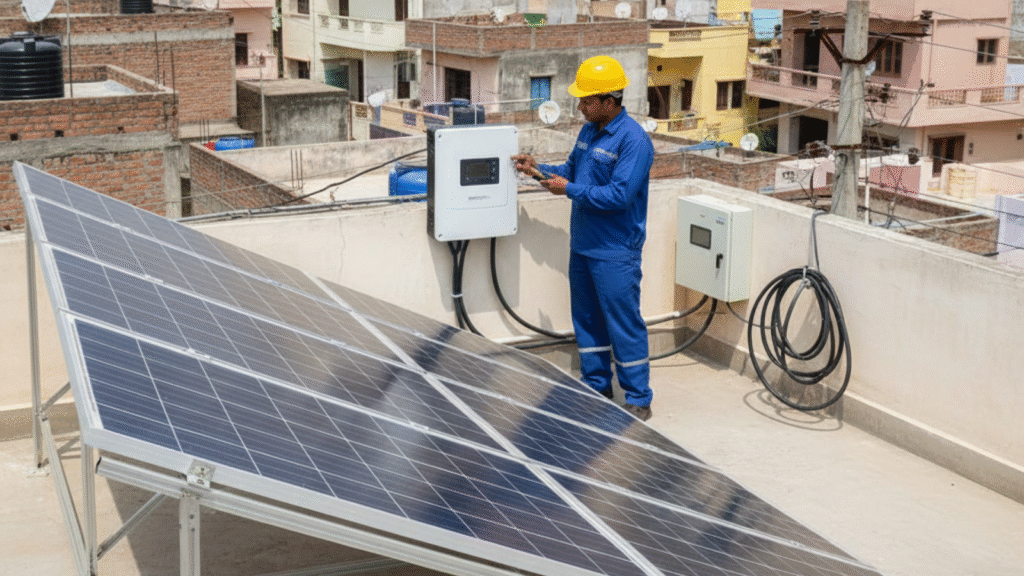
Every functional grid-tied setup requires four primary components to convert captured sunlight into usable, bill-reducing electricity.
1. Solar Photovoltaic (PV) Panels: The Energy Generator
Solar panels are the most visible of all On-Grid Solar Components. They capture sunlight and initiate the power generation process.
- Function: Panels use the photovoltaic effect to convert light energy directly into Direct Current (DC) electricity. Silicon wafers inside the panels generate this raw DC power, which then travels to the inverter.
- Key Types: Monocrystalline Panels offer the highest efficiency, ideal for limited roof space. Polycrystalline Panels cost less per watt, offering great value for larger roofs.
- Performance: The type and quantity of panels determine the total capacity and annual energy production of your On-Grid Solar System.
2. The Solar Inverter: The System’s Brain and Translator
The inverter performs the system’s most critical electrical job: it converts the power and manages the grid connection.
- Conversion: The inverter rapidly converts the raw DC electricity received from the panels into standard Alternating Current (AC) electricity. Your home and the utility grid rely on this AC power form.
- Safety Control: The inverter automatically activates anti-islanding protection when it detects a grid outage. This mandatory feature immediately shuts down power export, protecting utility workers.
- Types of Inverters: String Inverters are centralized units managing a series of panels. Microinverters are placed under each panel, maximizing output even with partial shading.
3. Mounting and Racking Structures: Security and Angle
These components provide the stable, weather-resistant foundation necessary for your entire array’s performance and safety.
- Security: Structures securely attach the panels to your roof or ground. They must withstand local environmental extremes like high winds and heavy snow loads. Installers typically use durable, corrosion-resistant materials like aluminum.
- Optimization: Racking ensures panels are positioned at the optimal tilt angle and orientation. Correct positioning allows the system to capture maximum sunlight, directly influencing energy production.
4. The Net Meter: The Bi-Directional Tracker
The Net Meter defines the financial benefit of an on-grid system by enabling Net Metering, the central financial incentive for going solar.
- Tracking Energy Flow: This specialized utility meter precisely measures electricity flow in two directions: energy pulled from the grid and excess energy pushed back to the grid.
- Creating Savings: The utility credits you for every kilowatt-hour (kWh) of power the system exports. These banked credits automatically offset the cost of electricity you import later, significantly reducing or even eliminating your utility bill.
Balance of System (BOS) Components: The Electrical Network
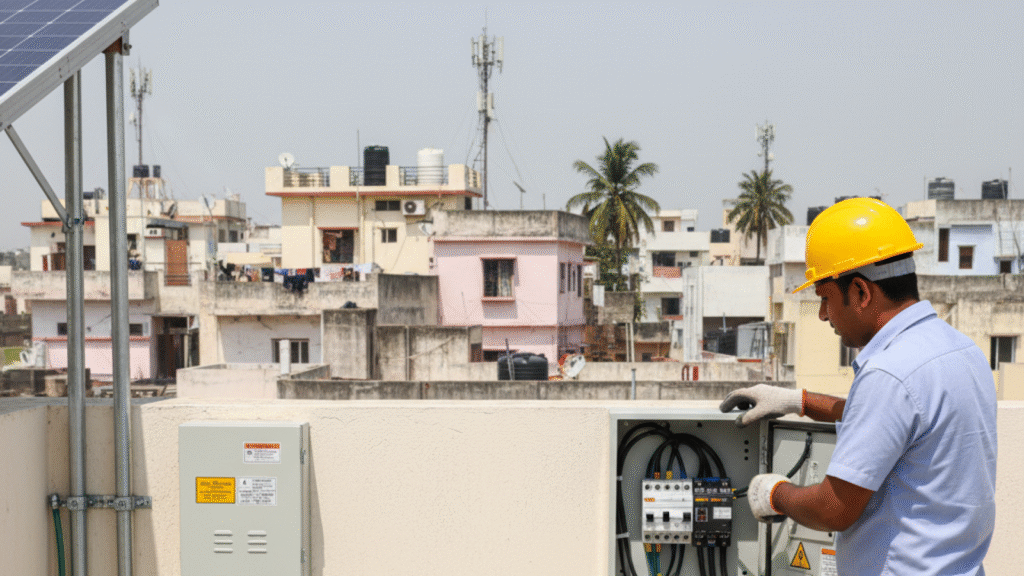
Beyond the four primary parts, the Balance of System (BOS) components form the necessary electrical network that safely connects and manages every element. These secondary components ensure overall safety, efficiency, and compliance.
Essential Electrical and Safety Gear
- Wiring and Conduits: High-quality, UV-resistant cables carry the DC and AC power. Conduits protect this essential wiring from weather and damage, maintaining the system’s longevity.
- Disconnect Switches: These manual switches allow personnel to safely and completely isolate the solar system from both the utility grid and your home’s electrical system during maintenance or emergencies.
- Fusing and Circuit Breakers: These crucial components protect the wires and equipment (especially the inverter) from damage caused by short circuits or power surges. They automatically interrupt the current flow if they detect an electrical fault.
- Grounding Equipment: Grounding rods and wires divert excess electrical energy, such as from a lightning strike or system fault, safely into the earth. This protects all On-Grid Solar Components and prevents hazards.
Operational Efficiency and Long-Term Value

A high-performing On-Grid Solar System relies on quality components, strategic installation, and continuous monitoring.
Maximizing Your Investment
- Performance Monitoring: Modern systems include software that tracks energy production in real-time. Active monitoring allows you to quickly identify and address any dips in performance, ensuring your system operates at peak efficiency.
- Component Lifespan: Investing in quality On-Grid Solar Components provides long-term value. Solar panels typically carry a 25-year performance warranty. While inverters require replacement (usually every 10–15 years), the mounting structures and electrical gear last the system’s entire life.
- Environmental Impact: By generating clean energy and reducing your demand for fossil fuel-based electricity, your on-grid system significantly lowers your carbon footprint, contributing directly to a more sustainable future.
Summary of On-Grid Solar Components
| Component Category | Specific Component | Primary Function (Active Voice) | Power Flow |
| Generation | Solar PV Panels | Panels convert sunlight into raw DC electricity. | DC Output |
| Conversion | Solar Inverter | The inverter changes DC power into grid-compatible AC power. | DC to AC |
| Structural | Mounting & Racking | Structures secure and position the panels for peak sun exposure. | N/A |
| Measurement | Net Meter | The meter tracks power imported from and exported to the grid. | Two-way |
Frequently Asked Questions (FAQ) on On-Grid Solar Components
Q. Why must on-grid systems shut down during a blackout?
A. The system must shut down for safety. The inverter activates an anti-islanding function to protect utility workers repairing lines from back-fed power.
Q. Do on-grid systems need maintenance?
A. Yes, they require minimal maintenance. Clean the panels periodically, and have technicians inspect the components annually for peak performance.
Q. How does Net Metering provide savings?
A. Net Metering gives you credit for all excess power you export to the grid. The Net Meter tracks this; you only pay the utility for the net difference.
Q. What is the expected lifespan of these components?
A. Panels have a 25-year performance warranty. Inverters generally last 10-15 years, while the mounting hardware lasts the entire life of the installation.
Q. Can I add battery storage to an existing on-grid system later?
A. Yes, you can add batteries later. You simply integrate a hybrid inverter or battery-specific inverter to manage storage alongside the grid connection.
